If you're in the market for multimeters and electrical testers, the real decision problem is scope versus speed. Do you need one tool that handles household wiring, electronics, and car repairs, or do you need a dedicated probe that lets you trace DC circuits under the hood without pulling out leads and setting modes? This head-to-head compares two affordable options: the Digital Multimeter LCD Voltmeter Ammeter Ohmmeter Volt AC DC Tester Leads Meter and the 5-90V DC Digital Circuit Tester Automotive Test Light Car Electrical Probe Tool.
Quick verdict
Choose the Digital Multimeter if you want the broader range of measurement functions. Choose the 5-90V DC Digital Circuit Tester if you spend most of your time diagnosing vehicle wiring and want a purpose-built probe for that specific job.
At a glance
| Product | Price | What it does | Best for |
|---|---|---|---|
| Digital Multimeter LCD Voltmeter Ammeter Ohmmeter Volt AC DC Tester Leads Meter | $6.99 | General-purpose electrical tester | General electrical work |
| 5-90V DC Digital Circuit Tester Automotive Test Light Car Electrical Probe Tool | $4.90 | Vehicle-focused DC circuit tester | Automotive diagnostics |
Where the multimeter wins
The multimeter is the more complete test instrument. It covers AC voltage, DC voltage, current, and resistance, so it can move from an outlet check to an electronics breadboard to an automotive sensor test. The display and Data Hold feature help you capture a reading before you pull the probes away, and the input protection components-a shunt resistor and HRC fuse-add a layer of confidence for general troubleshooting. It comes as a 2-pack, so you have a spare unit on hand.
Where the automotive tester wins
The automotive circuit tester is the faster, more focused tool for vehicle electrical work. Its digital display shows red for positive and green for negative, so polarity is obvious without decoding a number. The included extra probe and large clamp make it easier to reach tight spots, and the battery-powered design means you don't need a separate meter to power the test. It's a more direct tool when you're tracing wiring, checking a dead battery, or confirming alternator output.
Product notes
Digital Multimeter LCD Voltmeter Ammeter Ohmmeter Volt AC DC Tester Leads Meter
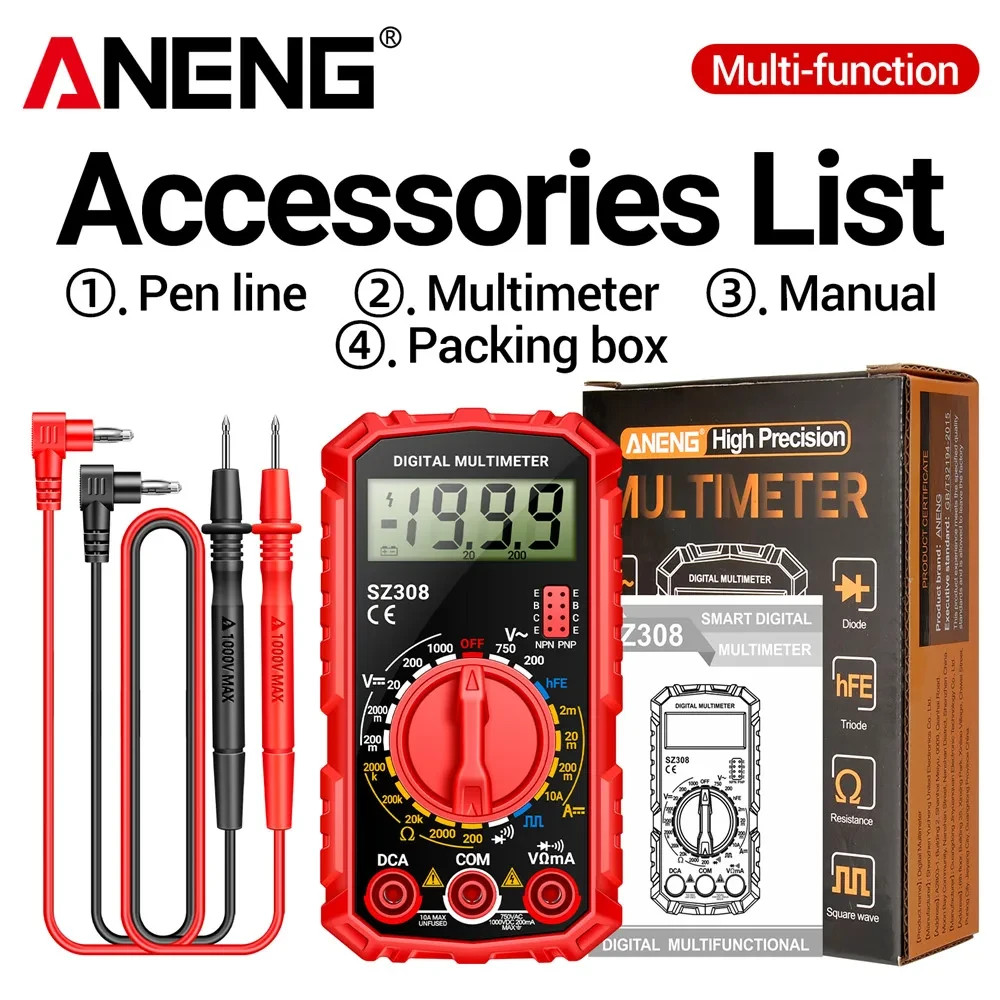
This is the tool to grab when you want one tester that does more than one job. It reads AC and DC voltage, current, and resistance, and the Data Hold button lets you freeze the display when the probe is in an awkward spot. It comes as a 2-pack, so you have a spare meter for the shop or the glovebox. The shunt resistor and HRC fuse in the input protection scheme gives you an extra measure of safety-minded design for DIY and repair work. The trade-off is that it's not a specialty automotive probe: it uses test leads rather than a clamp-and-probe setup, and you'll need to select the right mode for the measurement you're making. If you want versatility, this is the better buy.
5-90V DC Digital Circuit Tester Automotive Test Light Car Electrical Probe Tool
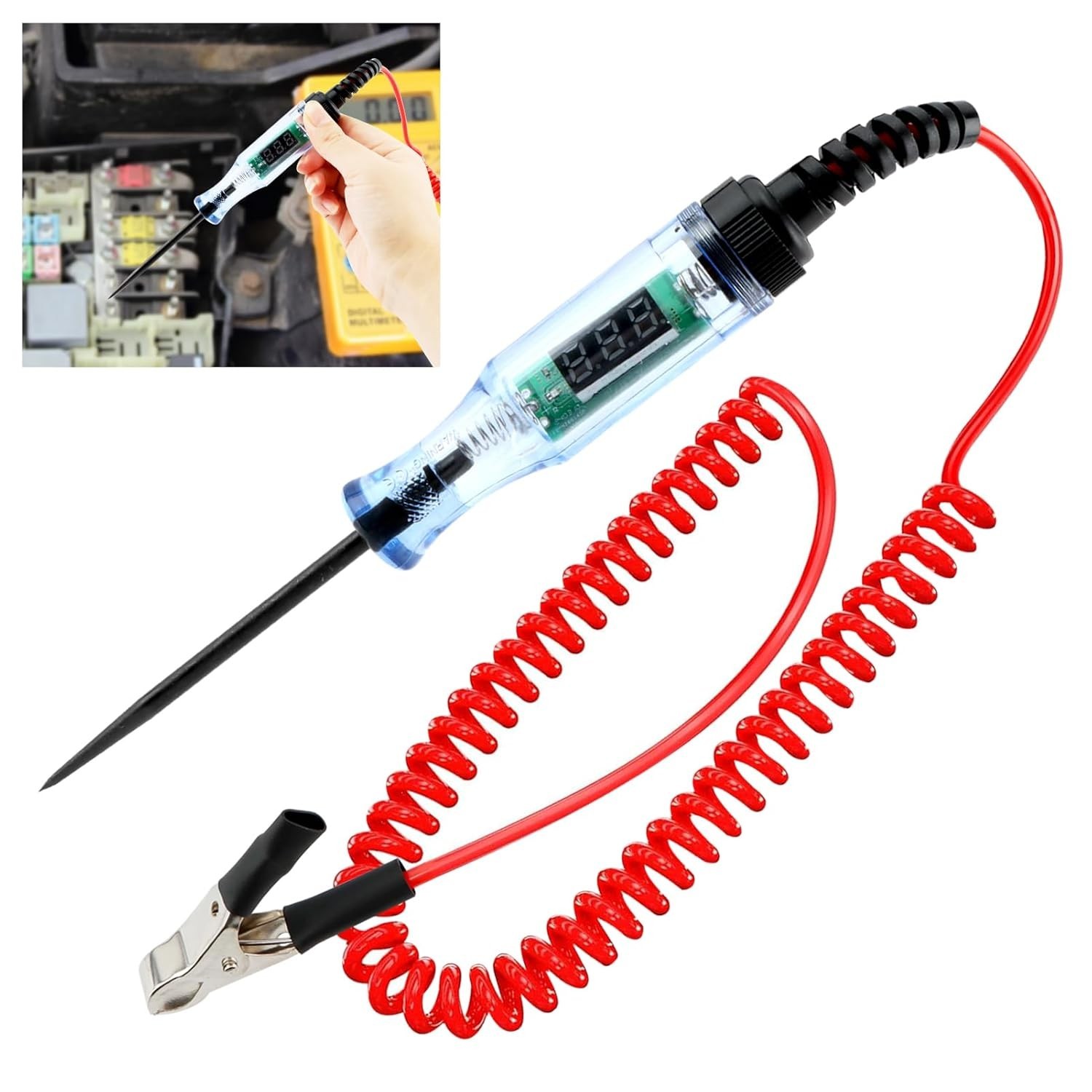
This probe is built for a specific job: finding electrical faults in vehicles. Its red-for-positive, green-for-negative display takes the guesswork out of polarity, and it gives 0.1V precise readings for tasks like diagnosing a dead battery, checking alternator output, and tracing faulty wiring. The kit includes an extra probe and a large clamp for tight spaces, and it's designed to work on cars, trucks, SUVs, and boats. The battery-powered housing keeps the tool self-contained, so you're not tied to a bench meter. The limitation is scope: it's focused on DC circuit testing, which is narrower than the multimeter's range. For dedicated automotive work, this is the more direct tool.
Final choice by use case
If your projects mix household wiring, car repairs, and general shop projects, the Digital Multimeter is the one to choose. Its broader measurement functions make it the more flexible daily companion. If your priority is fast, under-hood troubleshooting on vehicles, the 5-90V DC Digital Circuit Tester is the more purpose-built option. It gives you a clear path from symptom to source for vehicle electrical faults. Choose based on where you do most of your work.