Choosing between a digital multimeter and a non-contact voltage tester comes down to one question: do you need to know only whether power is present, or do you need to measure voltage, current, and resistance? The Digital Multimeter XL830L and the Electricity Test Pen sit at different ends of the electrical tester spectrum, and their price gap - from $7.89 down to $3.20 - reflects that split. Here's how to decide before you add one to your toolkit.
Quick verdict: Buy the Digital Multimeter XL830L if you troubleshoot circuits, test outlets, or work on electronics and need readings for voltage, current, continuity, diodes, and transistors. Buy the Electricity Test Pen if you just want a fast, non-contact safety check to confirm a wire is live before you touch it.
| Product | Price | Price Level | Voltage Scope | Main Strength |
|---|---|---|---|---|
| Digital Multimeter XL830L | $7.89 | AC/DC to 600V | Full diagnostics | |
| Electricity Test Pen | $3.20 | AC 90-1000V | Non-contact safety check |
Where the Digital Multimeter wins: It's a complete diagnostics station. You get AC and DC voltage measurement from 100mV to 600V, DC current from 0.0001mA to 10A, plus resistance, continuity with an audible buzzer, diode testing, and transistor testing. The backlight and data hold button make it easier to read in dim panels or awkward angles. For $7.89, it covers almost every electrical measurement a home user or electronics hobbyist would need.
Where the Electricity Test Pen wins: It's simpler and safer for the most common electrical job: checking if a wire or outlet is energized. Just touch the tip to a terminal, outlet, or cord; if the tip glows red and the pen beeps, voltage is present. It works across 90-1000V AC with a CAT II 1000V safety rating, and at $3.20 it costs $4.69 less than the multimeter. No range selection, no leads - just one hand and a few seconds.
Digital Multimeter XL830L
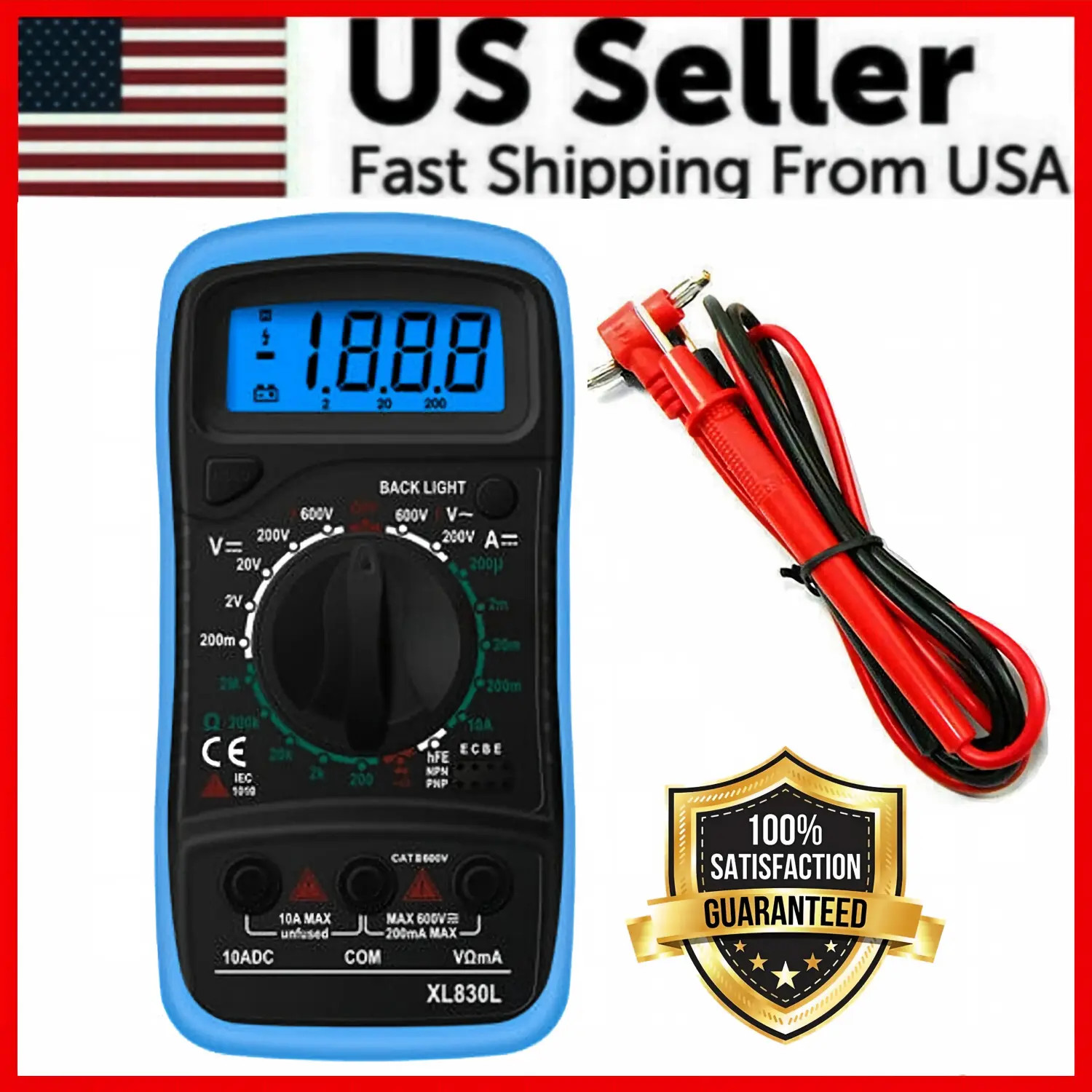
If you need to understand why a circuit is misbehaving rather than just whether it is live, the XL830L gives you the full picture. Its probe-based measurement modes cover AC and DC voltage up to 600V, DC current up to 10A, resistance, continuity with a buzzer, diode testing, and transistor testing. The backlight and data hold button are practical extras when you're working in a dim panel or trying to read a display in an awkward position. At $7.89, it replaces a handful of separate testers. The trade-off is that all of those functions take time to learn and require selecting the right range and input jacks. For quick non-contact checks, you'll still want a separate voltage pen.
Electricity Test Pen
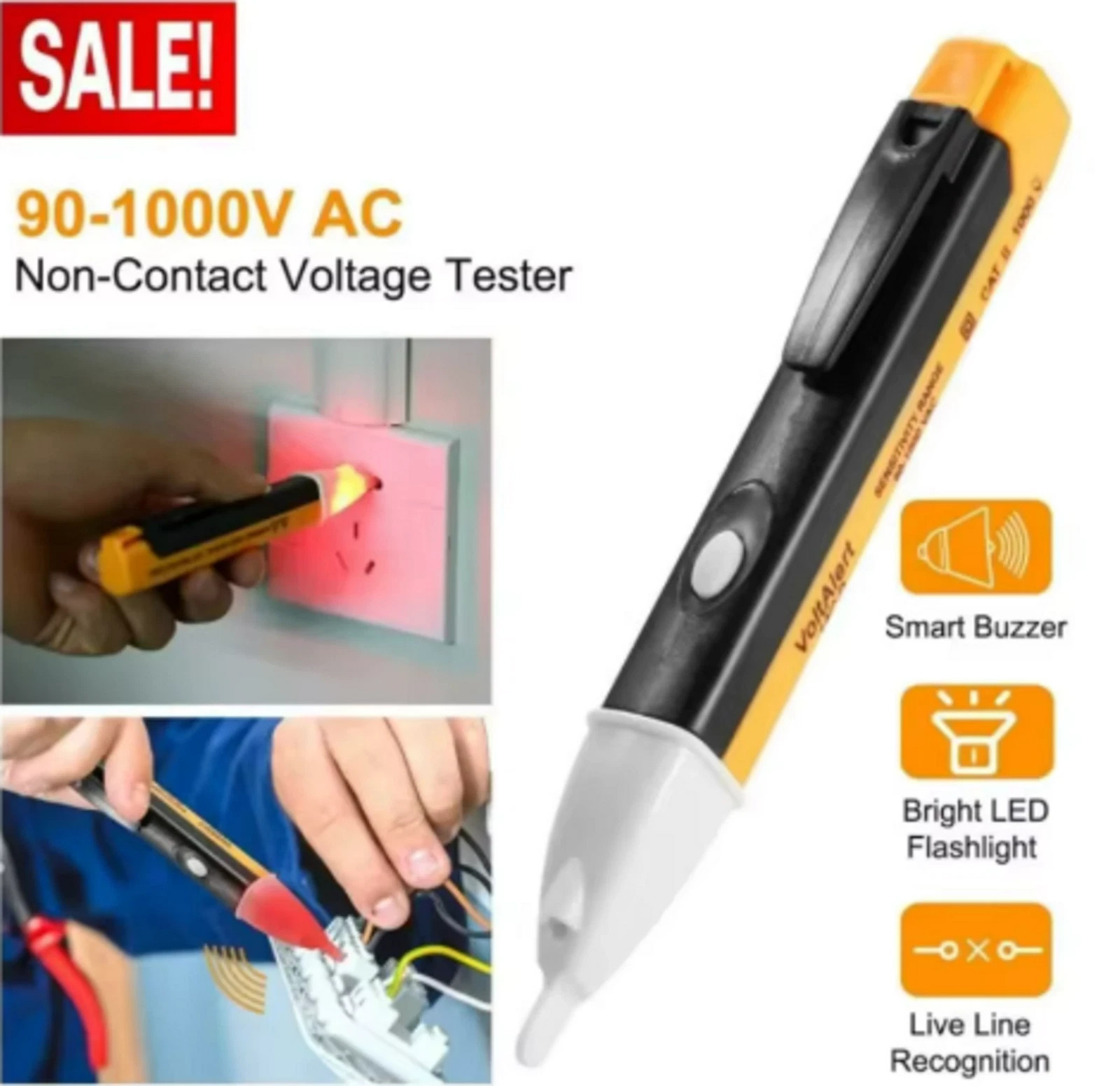
The Electricity Test Pen is the tool you grab when you need a yes or no answer about AC voltage. It detects voltage from 90V to 1000V AC without touching bare wires - the tip glows red and the pen beeps when power is present. That makes it ideal for homeowners checking outlets, appliance cords, or breaker panels before doing routine work. It's rated CAT II 1000V, has a frequency range of 50 to 500 Hz, and runs on two AAA batteries (not included). At $3.20, it's the cheapest way to add a non-contact tester to your bag. The limitation is obvious: it only detects AC voltage. It won't measure current, resistance, DC voltage, or continuity, so it can't help you diagnose why a circuit is dead or overloaded.
Final choice by use case:
- For electronics repair, appliance troubleshooting, or any job that requires measuring voltage, current, or resistance, choose the Digital Multimeter XL830L.
- For a quick safety check before touching wires, outlets, or switches, choose the Electricity Test Pen.
- If your budget is tight and you only want one tool, the multimeter covers more ground; the pen is enough if you never need to read exact values.