If you're shopping for a non-contact voltage tester in the multimeters and electrical testers category, you'll quickly notice two very different approaches. The first is a simple voltage test pen that costs $4.29 and is designed for quick checks. The second is an AC voltage tester from XF at $12.99, built for more demanding tasks. Both tools let you check for live voltage without touching bare wires, but they differ in sensitivity, extra features, and price. The right choice depends on the kinds of circuits you work with and whether you need a pocket-friendly pen or a more comprehensive tester.
Quick verdict: Choose the Voltage Electric Tester Volt Detector Test Pen if you want a basic tool for everyday checks. Choose the AC Voltage Tester from XF if you need a more feature-rich non-contact tester.
| Feature | Voltage Electric Tester Test Pen | AC Voltage Tester (XF) |
|---|---|---|
| Price | $4.29 | $12.99 |
| AC Voltage Range | 12-1000V | 12-1000V and 48-1000V |
| DC Detection | Yes | No |
| Dual Sensitivity Modes | No | Yes |
| Digital Display | Yes | Yes |
| Built-in Flashlight | No | Yes |
| Body Material | Insulating ABS plastic | Aluminum and plastic |
| Country of Origin | United States | China |
Where each product wins
The Voltage Electric Tester Test Pen is the more direct, simpler option. It covers the basics without extra bulk, making it easy to carry in a pocket or pouch. The AC Voltage Tester from XF offers a wider range of features and a sturdier construction. That robustness and the additional feedback make it more suitable for regular use around panels and junction boxes.
Voltage Electric Tester Volt Detector Test Pen
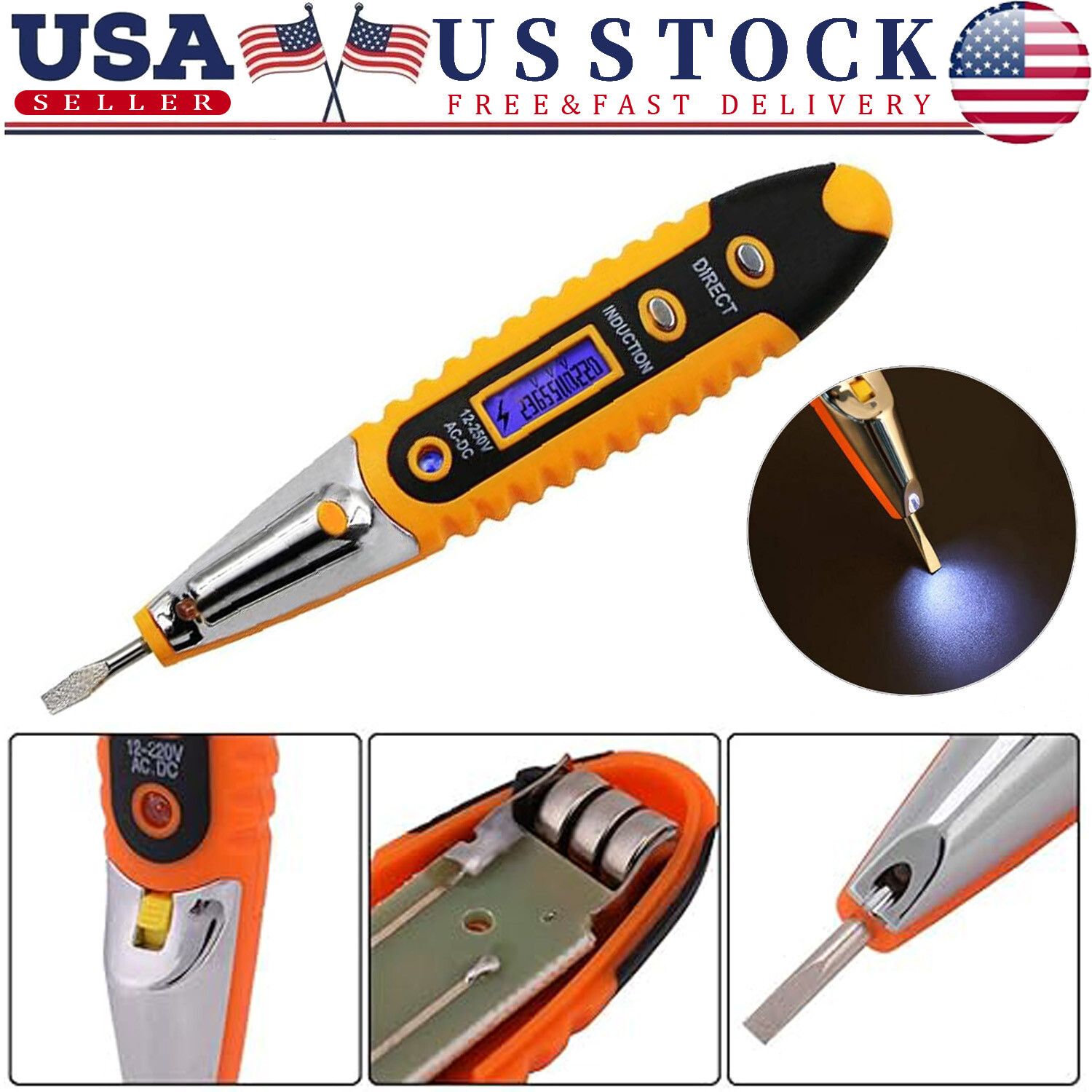
This pen keeps electrical testing simple. It detects both AC and DC, which is a useful extra at this price level. The blue-ray digital display is easy to read in dark spaces, and the pen includes self-checking to help find broken points or distinguish null lines. The main limitation is that it has a single detection mode, so you won't get adjustable sensitivity. It also lacks a flashlight, meaning you'll need ambient light to work in dim areas. If you want a no-frills tool that covers both AC and DC, this pen is a practical choice.
AC Voltage Tester/Non-Contact Voltage Tester
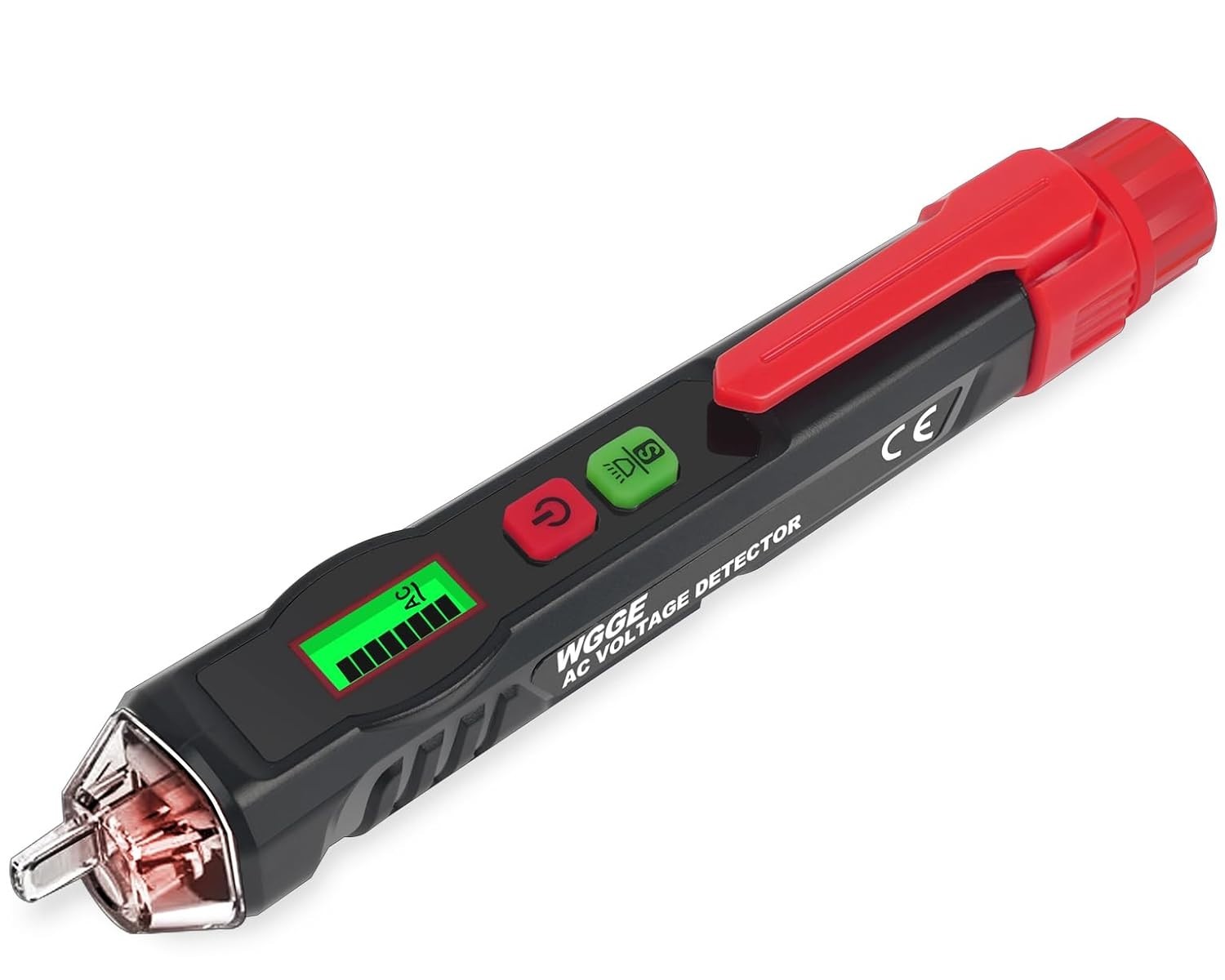
This XF model is built for AC-only testing. You get a color-coded screen and an audible buzzer that beeps faster as you approach a live source. The built-in LED flashlight is a nice convenience for dark panels, and the body feels durable in your hand. The trade-offs are that it only reads AC voltage and costs more money. For the extra price, you're paying for the flashlight, the audio-visual feedback, and a robust build. If those features help you work faster or safer, the extra cost is reasonable; if not, the basic pen may suffice.
Final choice by use case
For a basic, lower-priced tool that covers more than just AC, choose the Voltage Electric Tester Test Pen. For a more capable AC non-contact tester with extra convenience, choose the AC Voltage Tester from XF. Think about how often you test circuits and whether you prefer minimalism or added features. If occasional checks are the norm, the pen's simplicity is a strength. If you work regularly in dim or varied environments, the XF's additional capabilities are worth the extra money.