When you're shopping for multimeters and electrical testers, the first question is usually how much information you need from the tool. Do you want a quick answer before you touch a wire, or do you want to diagnose an entire circuit? This head-to-head looks at a voltage test pen and a digital multimeter to help you decide.
Quick verdict
Between these two, the choice is simple: need a quick go/no-go live-wire check? The Voltage Test Pen is the faster, easier option. Need actual values instead of a signal? The Digital Multimeter is the more complete tool. The $2.36 gap between them is the price of moving from 'is it live?' to 'what's the value?'
Comparison at a glance
| What matters | Voltage Test Pen | Digital Multimeter |
|---|---|---|
| Price | USD 6.59 | USD 8.95 |
| Main job | Non-contact voltage detection | Voltage, current, resistance, capacitance, continuity, diode readings |
| Display | Blu-ray digital display | 3-digit LCD with backlight |
| Included | 2 test pens | Handheld meter |
Where each product wins
Where the Voltage Test Pen wins
- Compact pen shape
- Self-check function before you start
- Good for quickly finding a broken point
Where the Digital Multimeter wins
- Reads numbers, not just a signal
- Auto-ranging and data hold make measurements easier
- Covers more test functions in one handheld tool
Product notes
Voltage Electric Tester Volt Detector Test Pen AC DC Non-Contact Sensor 12-1000V

This pen-style tester comes as a two-pack, so you can keep one in the toolbox and one near the panel. Its non-contact sensor is meant to spot AC/DC voltage in the 12-1000V range, and the Blu-ray display stays readable in dim spaces, which helps when you're checking outlets or switches in poor lighting. The self-check function lets you verify the tester is working before you rely on it, and the ability to help find a broken point makes it more than a simple indicator. The limitation: it tells you whether voltage is present, not what the value is. It won't measure resistance, current, capacitance, or continuity, so it's not a substitute for a multimeter when you need numbers. For a quick safety check, that trade-off is easy to live with.
Digital Multimeter LCD Voltmeter Ammeter Ohmmeter Volt AC DC Tester Lead Meter
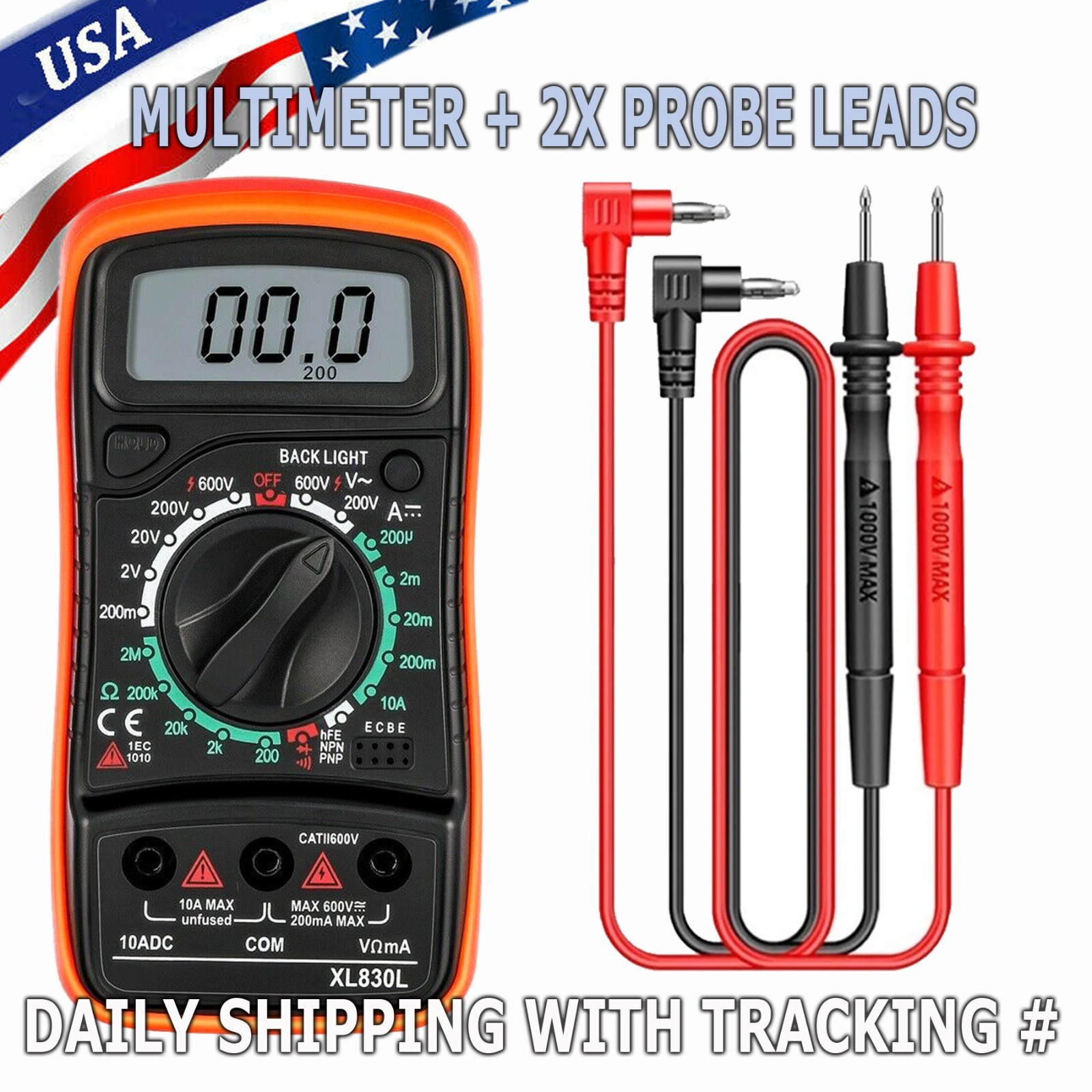
This handheld digital multimeter is the all-around instrument in this matchup. It handles AC/DC voltage, current, resistance, capacitance, continuity, diode testing, and duty cycle, so it can look at a circuit the way a test pen cannot. It adds auto-ranging, data hold, backlight, low-battery indication, and a battery door for easy access, which are practical touches when you're working through a series of measurements. The 3-digit LCD reads up to 1999 counts, which is a basic-resolution display but enough for most home and shop diagnostics. The trade-off is the bulkier handheld size, and the color is listed as red or black, so you may not get to pick. If you need a value rather than just a signal, this is the one.
Final choice by use case
If you just need to confirm a wire is off before working on it, pick the Voltage Test Pen. If you're diagnosing why an outlet stopped working, checking a fuse, or measuring a battery, pick the Digital Multimeter.