Choosing between a voltage tester pen and a digital multimeter is a question of how much information you need before you touch a wire. A pen tells you whether a circuit is live; a multimeter gives you the exact voltage, current, and resistance. The two options here sit at opposite ends of a $3.60 spread, so the practical difference matters. The pen is the classic no-nonsense tool for electricians and homeowners alike. The multimeter is the all-purpose diagnostic device. Your choice depends on whether you are checking a socket or solving a wiring puzzle.
Quick verdict
If you need to confirm a circuit is dead before you touch it, the pen tester is the faster, more affordable option. If you need to know exactly what a circuit is doing, the XL830L multimeter is the better investment. The $3.60 difference buys a much wider set of diagnostic capabilities. If your work rarely goes beyond checking whether a wire is energized, the pen may be all you need. If you are learning electronics or maintaining appliances, the multimeter gives you room to grow.
At a glance
| Feature | Pen tester | XL830L multimeter |
| Price | USD 4.29 | USD 7.89 |
| AC Voltage Range | 12-1000V | 100mV-600V |
| Measurement Modes | AC/DC presence detection | AC/DC voltage, current, resistance, continuity, diode, transistor |
| Display | Blue-ray digital display | Digital display with backlight and data hold |
| Form Factor | Pen-style probe | Handheld meter with probes |
| Price Bar | | |
Where each product wins
Voltage Electric Tester Pen wins for live-circuit checks. It delivers an answer in seconds, with a smaller footprint and a lower price. You can carry it in a pocket and use it before touching anything.
Digital Multimeter XL830L wins for troubleshooting. It gives you actual measurements across multiple modes, which matters when you're diagnosing why something isn't working rather than just checking whether it's live.
Product notes
Voltage Electric Tester Volt Detector Test Pen AC DC Non-Contact Sensor 12-1000V
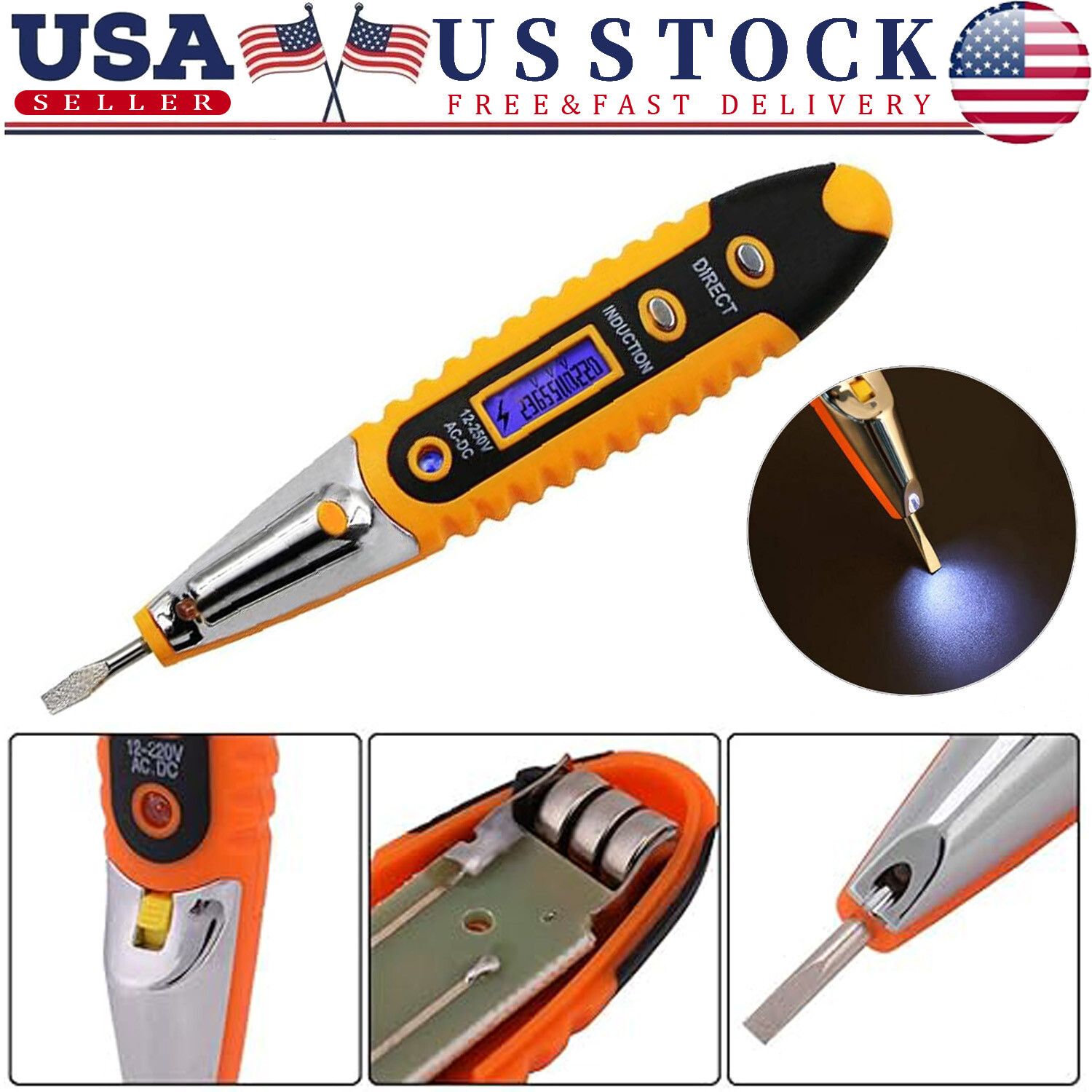
The pen-style tester is built for speed and reach. Its non-contact sensor reads AC voltage across a 12-1000V range, and the digital display stays readable in dark spots. You get self-checking and the ability to detect DC power, distinguish null line, and find broken points. The limitation is that it's a detector rather than a meter: it won't show you exact voltage values or measure current or resistance. If you're doing basic home safety checks, that's a fine trade-off. If you need quantitative readings, you'll outgrow it quickly.
Digital Multimeter AC DC Voltmeter Ammeter Ohmmeter Volt Tester Meter XL830L USA
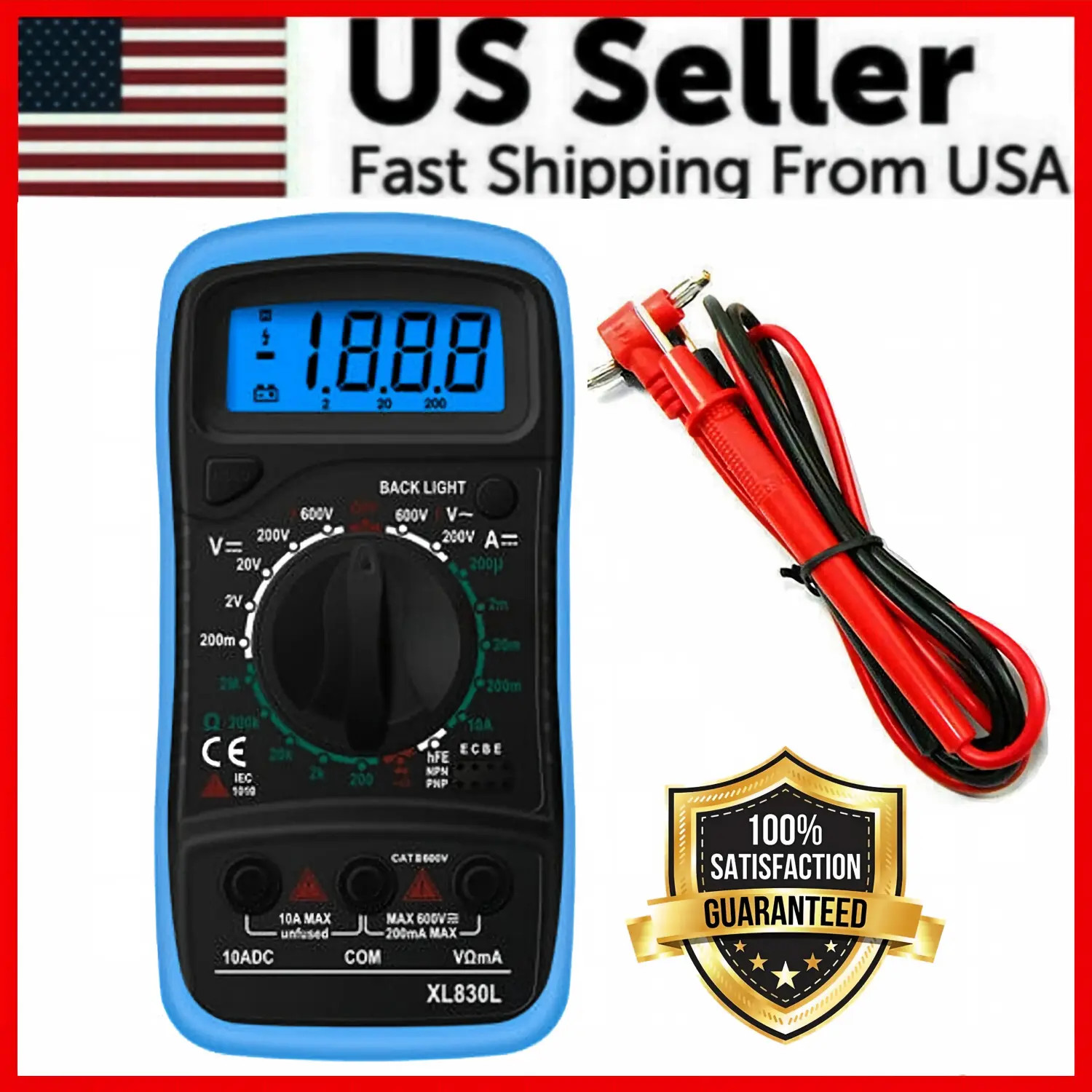
The XL830L is a full diagnostic tool in a handheld body. It measures AC and DC voltage, current, resistance, and includes continuity, diode, and transistor test modes. The audible continuity buzzer is handy for tracing wires, and the data hold and backlight make it easier to capture readings in awkward positions. The trade-off is that you have to select the correct mode and make contact with probes, so it's slower for a quick live-dead check, and the body is bulkier than a pen. For anyone who repairs appliances, builds circuits, or wants to understand why a reading is off, this meter is the one to reach for.
Final choice by use case
- For quick safety checks on outlets and switches: choose the Voltage Electric Tester Pen at $4.29.
- For detailed electrical troubleshooting and component testing: choose the Digital Multimeter XL830L at $7.89.