
Photos from current listings. Actual item, color, and included accessories may vary.
Benchtop Centrifuge Buying Guide
A benchtop centrifuge is a compact lab machine that spins liquid samples to separate components by density, defined by its rotor capacity, speed, and safety enclosure. The core trade-off is between high-speed/low-capacity micro-tubes and lower-speed/high-capacity tube rotors—both are valid, but mixing them up wastes money or ruins separations. The decision rule: match rotor capacity and tube format to your actual sample volume and g-force requirement, and never buy a fixed-angle rotor for protocols that need a swinging-bucket horizontal spin.
Median $283.50 · New & pre-owned listings
Key takeaways
- Rotor type determines separation geometry: fixed-angle rotors pellet faster at high g-force, while swinging-bucket rotors give flat horizontal layers needed for density-gradient work.
- Speed alone is meaningless without rotor radius—RCF (relative centrifugal force) in ×g is the true performance metric; a 4,000 rpm compact can exceed 2,000 ×g with a small radius.
- Tube capacity tiers are fixed by rotor design: 8×15 mL, 8×50 mL, 12×1.5/2 mL micro-tube, and 4×100 mL are common, and you cannot exceed the rotor's rated tube size.
At a glance
- Category
- Centrifuges, Mixers & Shakers
- Last updated
- Nov 28, 2026
Current offers
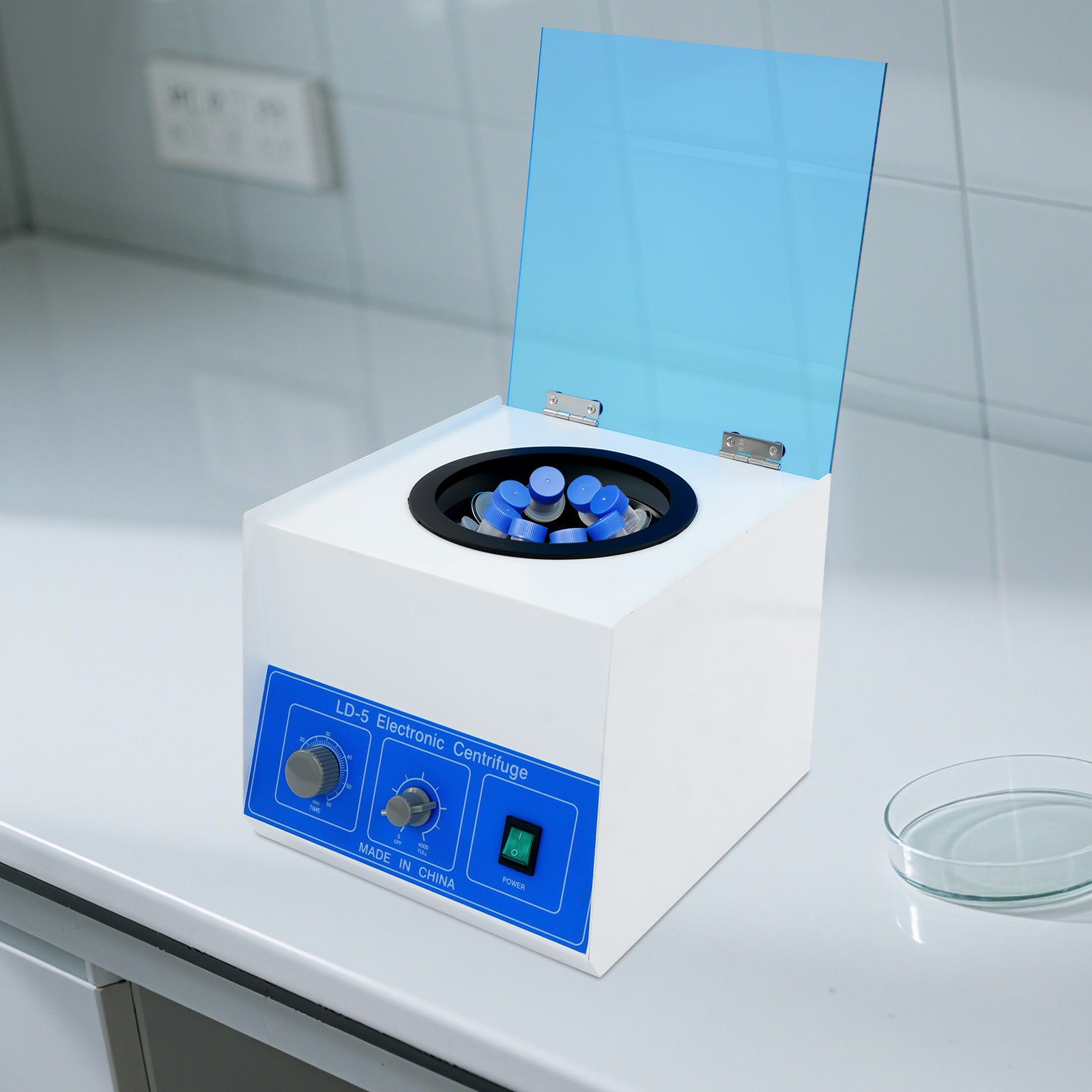 50 ml × 8 Electric Centrifuge Medical Lab Benchtop Centrifugal Separator Machine$153.82View on eBay
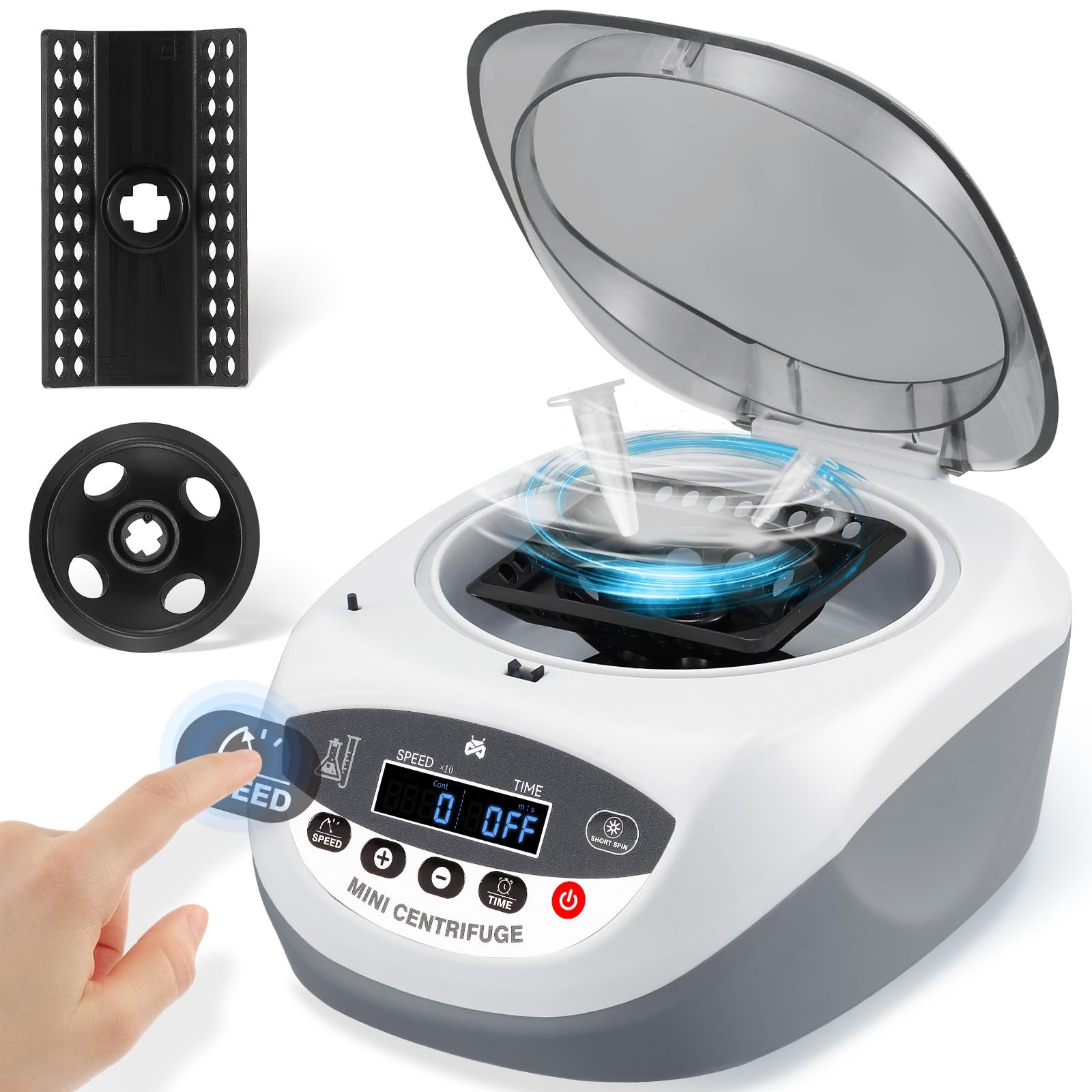 Mini Centrifuge Machine, 12000RPM Lab Benchtop PCR Centrifuges$232.65New · Last checked Nov 26, 2026View on eBay
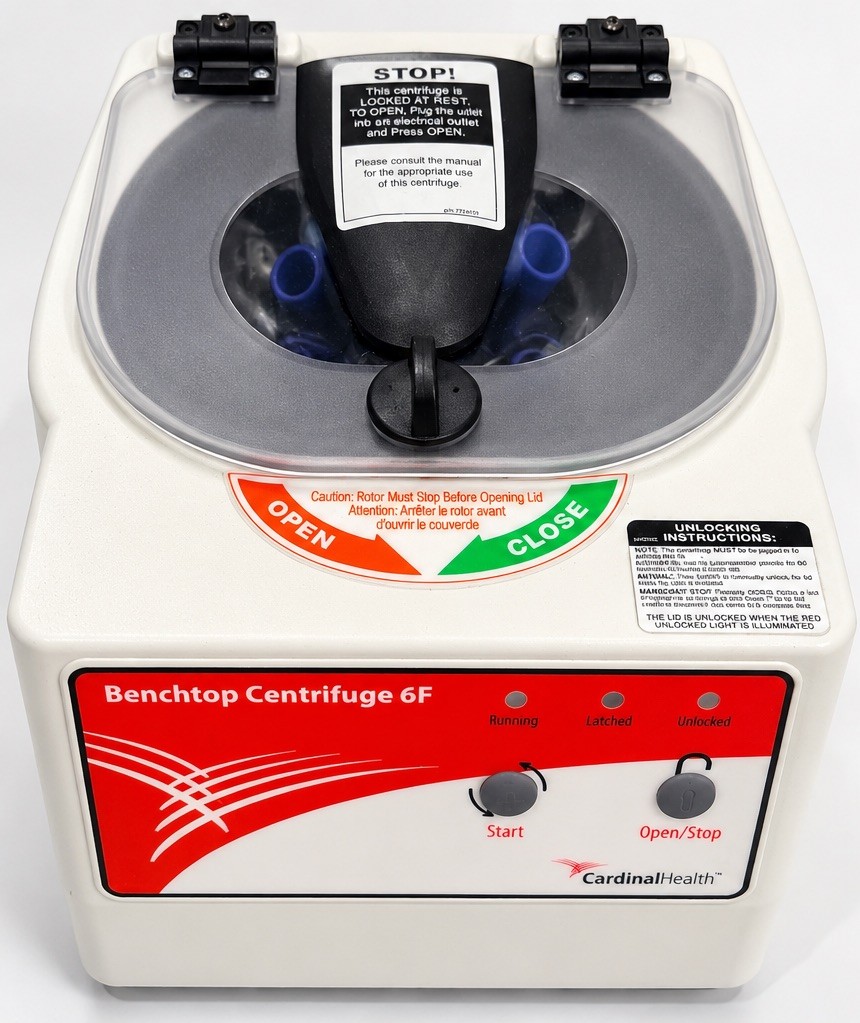 Cardinal Health Benchtop Centrifuge 6F 642E Low Speed Fixed-Angle Rotor$283.50Used · Last checked Nov 26, 2026View on eBay
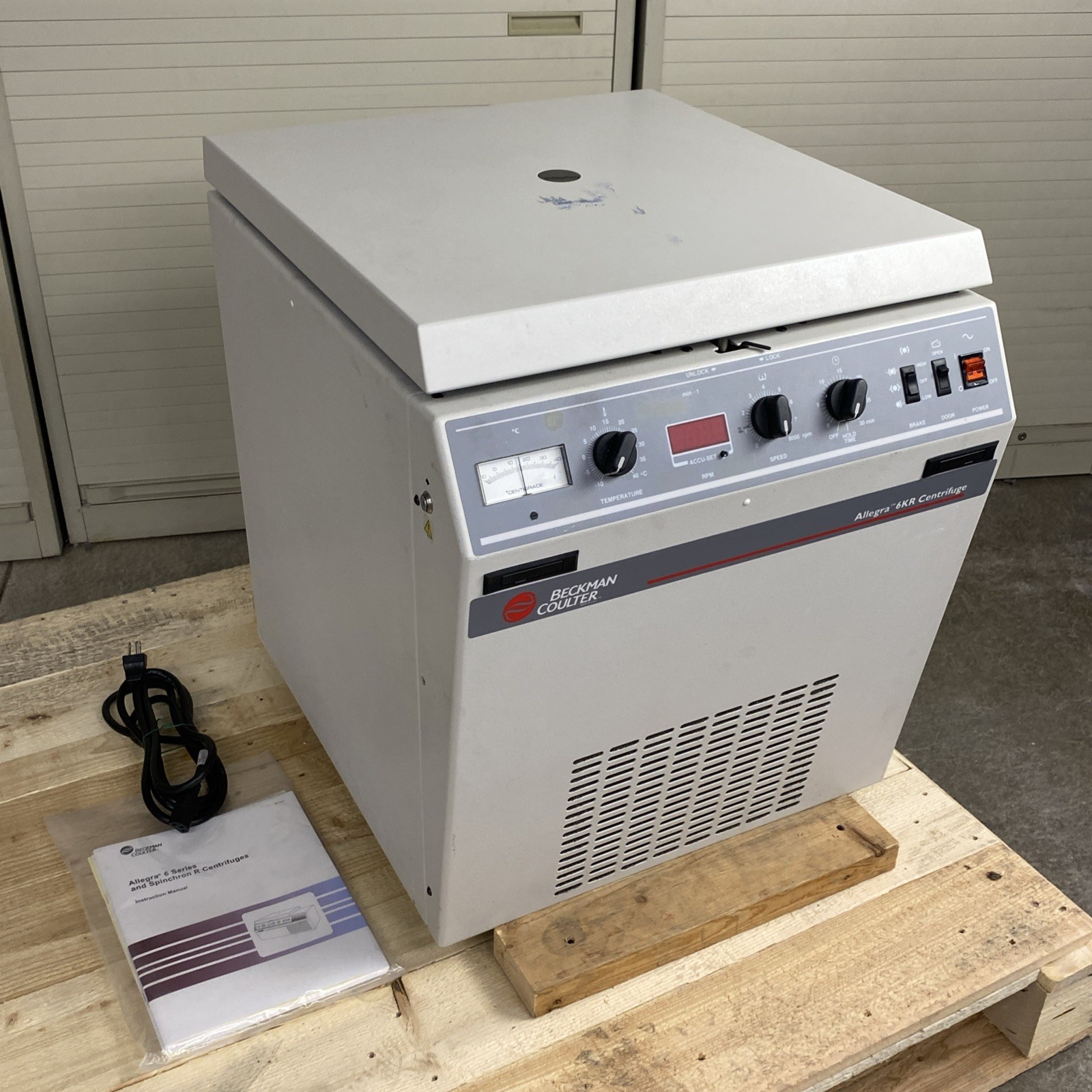 Beckman Coulter Allegra-6kr Refrigerated Benchtop Centrifuge$297.46Used · Last checked Nov 26, 2026View on eBay
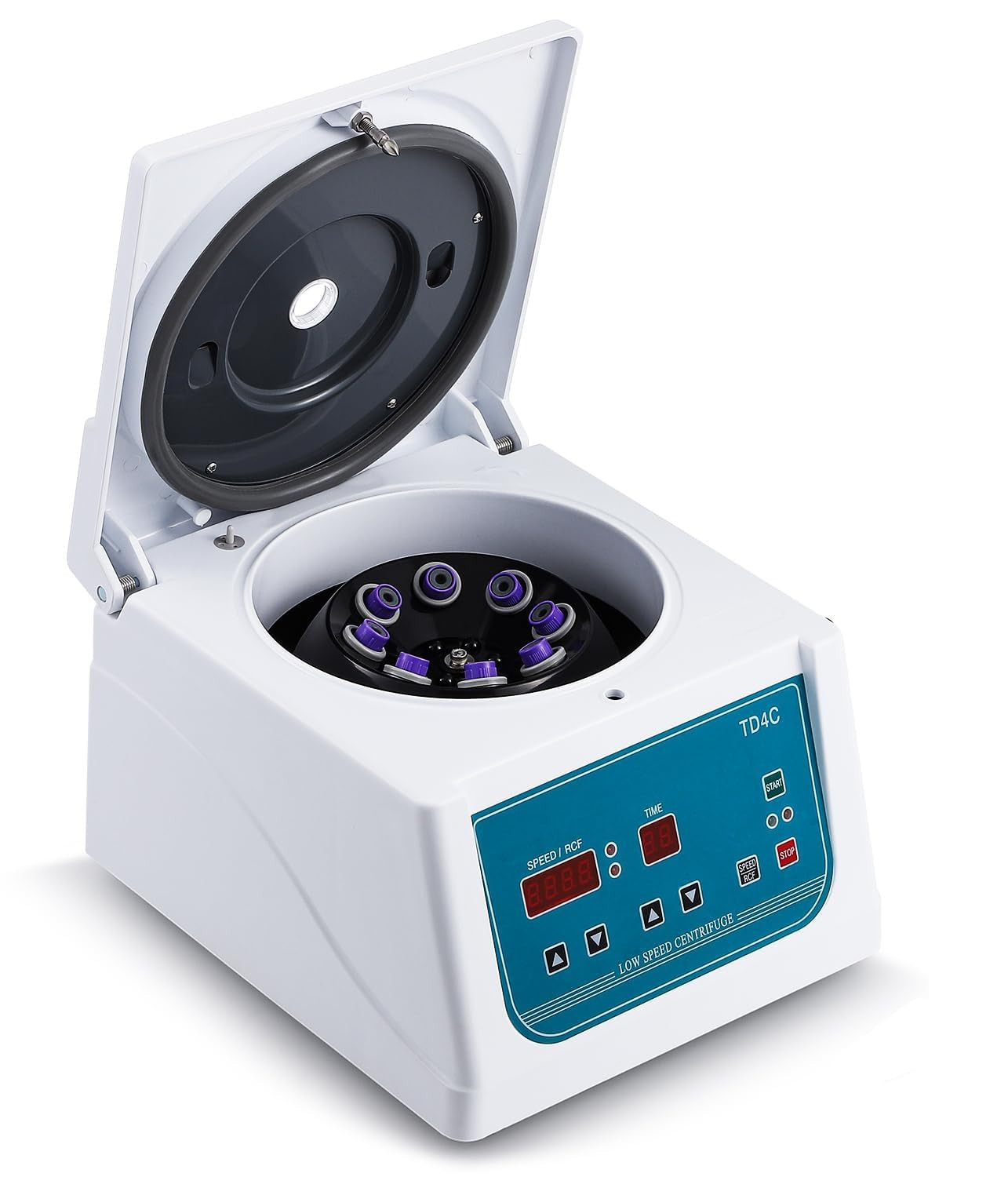 Centrifuge Machine Lab PRP Benchtop Centrifuge 100-4000RPM Low Sp...$419.99New · Last checked Nov 26, 2026View on eBay
Highlights
- Rotor type determines separation geometry: fixed-angle rotors pellet faster at high g-force, while swinging-bucket rotors give flat horizontal layers needed for density-gradient work.
- Speed alone is meaningless without rotor radius—RCF (relative centrifugal force) in ×g is the true performance metric; a 4,000 rpm compact can exceed 2,000 ×g with a small radius.
- Tube capacity tiers are fixed by rotor design: 8×15 mL, 8×50 mL, 12×1.5/2 mL micro-tube, and 4×100 mL are common, and you cannot exceed the rotor's rated tube size.
- Safety enclosure and lid interlock are non-negotiable: aerosol-tight lids and imbalance detection separate lab-grade units from generic separators that risk sample loss and rotor failure.
Best use cases
- Best fit: 8×50 mL fixed-angle rotor for urine, blood, and cell-culture pelleting at 3,000–5,000 rpm; skip micro-tube-only units if your protocol uses 15 or 50 mL conical tubes.
- Best fit: 12×1.5/2 mL micro-centrifuge for DNA/RNA spin columns and Eppendorf-style protocols at 10,000–14,000 rpm; skip low-speed 4,000 rpm units that cannot pellet nucleic acids.
- Best fit: swinging-bucket rotor for PBMC isolation and density-gradient separations where a flat interface matters; skip fixed-angle rotors for these protocols.
- Wrong fit: high-capacity 4×100 mL floor-model rotors for a small bench—verify footprint and voltage; these need dedicated bench space and often 220–240 V.
Buying tips
- Calculate RCF before buying: RCF = 1.12 × r (mm) × (rpm/1000)²; compare rotors at the same ×g, not the same rpm, because a 6,000 rpm micro-unit can out-pellet a 4,000 rpm 50 mL unit.
- Match tube format exactly: 50 mL conical tubes need a rotor rated for 50 mL conical, and 15 mL tubes need adapters or a dedicated rotor—mixing sizes without adapters causes imbalance and rotor damage.
- Choose lid and aerosol containment grade for your biosafety level: sealed rotor lids with O-rings are required for pathogen work; open rotors are only for non-hazardous separations.
- Select voltage and plug standard for your region: benchtop centrifuges are commonly 110–120 V (US) or 220–240 V (EU/UK), and dual-voltage models cost more—buy the correct regional version.
Specs
| Rotor Type | Fixed-angle vs Swinging-bucket |
|---|---|
| Max RCF | 2,000–14,000 ×g by class |
| Tube Capacity | 8×15/50 mL, 12×1.5/2 mL, 4×100 mL |
| Voltage/Plug | 110–120 V US / 220–240 V EU-UK |
Related searches
What to check before buying
- Measure bench depth and clearance: benchtop units range roughly 12–24 inches wide; confirm lid swing and ventilation clearance before ordering.
- Confirm your tube OD and length fit the rotor bore—50 mL conical tubes are ~30 mm OD, and 15 mL tubes are ~17 mm OD; rotors are size-specific.
- Verify lab voltage and plug type (110–120 V NEMA 5-15 vs 220–240 V Schuko/UK) and whether the unit ships with a regional cord.
- Check whether aerosol-tight lids, adapters, and spare O-rings are included or sold separately—missing adapters make a 50 mL rotor unusable for 15 mL tubes.
FAQ
Data sources: eBay / Amazon listings and product attribute feeds. Updated Nov 28, 2026.
Some links on this page are affiliate links. If you buy after clicking one, we may earn a commission at no extra cost to you. This does not change which products appear here or their order. Affiliate disclosure.