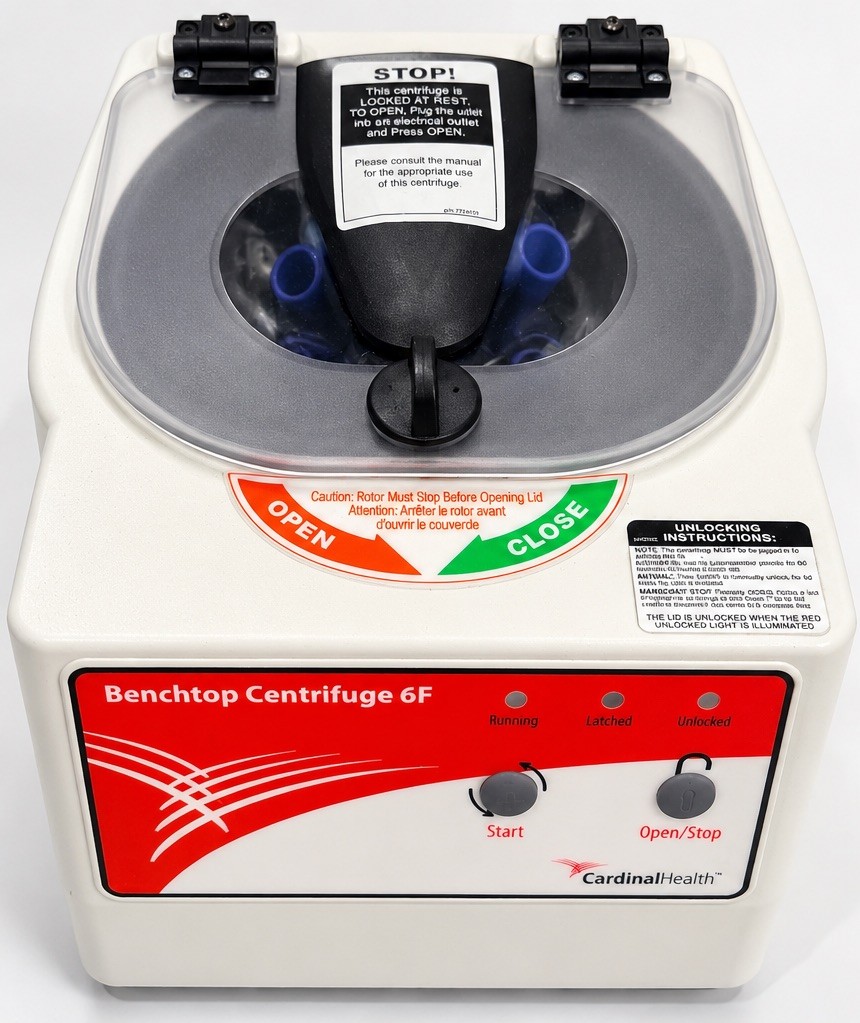

Photos from current listings. Actual item, color, and included accessories may vary.
Centrifuge Rotor Buying Guide
A centrifuge rotor is the interchangeable spinning assembly that holds sample tubes and converts motor speed (RPM) into the actual separating force (RCF) your protocol requires. The core trade-off is rotor material and tube-format compatibility: fixed-angle aluminum or polypropylene rotors hold calibration and resist imbalance, while thin generic swing-bucket or press-fit rotors flex and wear out. The decision rule is simple: buy the rotor that exactly matches your tube diameter and RCF target from a seller that publishes the rotor's material, max RCF, and tube capacity—skip anything that lists only RPM.
Key takeaways
- RCF is the real performance number: RCF = 1.118 × r × (RPM/1000)², so the same 7,000 RPM yields very different force at a 3 cm vs 8 cm radius.
- Fixed-angle rotors (typically 45° tube angle) are standard for microcentrifuge work with 0.2/1.5/2 mL tubes; swing-bucket rotors are only for low-speed horizontal pelleting.
- Rotor material decides durability: machined aluminum or fiber-reinforced polypropylene holds balance; thin molded plastic press-fit rotors deform and cause vibration.
At a glance
- Category
- Centrifuges, Mixers & Shakers
- Last updated
- Nov 28, 2026
Current offers
Highlights
- RCF is the real performance number: RCF = 1.118 × r × (RPM/1000)², so the same 7,000 RPM yields very different force at a 3 cm vs 8 cm radius.
- Fixed-angle rotors (typically 45° tube angle) are standard for microcentrifuge work with 0.2/1.5/2 mL tubes; swing-bucket rotors are only for low-speed horizontal pelleting.
- Rotor material decides durability: machined aluminum or fiber-reinforced polypropylene holds balance; thin molded plastic press-fit rotors deform and cause vibration.
- Tube-format lock-in is absolute—a 1.5/2 mL rotor cannot grip 5/10/15 mL tubes, and a 2-in-1 adapter rotor trades max RCF for format flexibility.
Best use cases
- Pick a 2-in-1 microcentrifuge rotor (0.2/1.5/2 mL) at 7,000 RPM / ~3,000 xg for PRP, DNA mini-preps, and PCR strip work—skip it for 15 mL cell culture pelleting.
- Pick a single low-speed rotor for 2/5/10/15 mL tubes at 500–4,000 RPM when your protocol is cell washing or urine/serum prep—skip it for high-RCF sedimentation.
- Pick an aluminum fixed-angle rotor only if the seller states rotor material and max RCF—skip unbranded press-fit rotors when you spin at the top of the speed range daily.
Buying tips
- Match rotor tube capacity to your exact tube OD: 0.2 mL PCR strips, 1.5/2 mL snap-cap, and 15 mL conical each need a different bore, and adapters only fix small gaps.
- Use the RCF formula to check the rotor's radius against your protocol; a rotor rated 3,000 xg at max speed will under-spin if your protocol needs 10,000 xg.
- Choose a rotor with a stated max RCF and tube angle—rotors sold only by RPM hide the radius, which is the number that determines separation.
- For multi-user labs, buy the 2-in-1 adapter rotor; for single-protocol high-throughput work, buy the dedicated fixed-angle rotor for better balance and tube fit.
Specs
| Rotor Type | Fixed-angle vs swing-bucket / 2-in-1 |
|---|---|
| Tube Formats | 0.2 / 1.5-2 / 5-15 mL bores |
| Max RCF | ~2,000-3,000 xg micro / up to 10,000+ xg |
| Rotor Material | Machined aluminum / reinforced PP |
Related searches
What to check before buying
- Measure your tube outer diameter and height (0.2 mL, 1.5/2 mL, 5/10/15 mL) and confirm the rotor bore and depth match before ordering.
- Confirm your centrifuge's rotor-mount style (screw-on lid, press-fit, or bayonet) and max chamber diameter so the rotor physically seats.
- Check lab voltage and plug standard (US 120 V vs EU 230 V) for the centrifuge body, since rotors are sold as accessories to specific models.
- Verify the rotor's published max RCF and material grade—aluminum or reinforced PP—so daily top-speed use does not deform the tube bores.
FAQ
Data sources: eBay / Amazon listings and product attribute feeds. Updated Nov 28, 2026.
Some links on this page are affiliate links. If you buy after clicking one, we may earn a commission at no extra cost to you. This does not change which products appear here or their order. Affiliate disclosure.