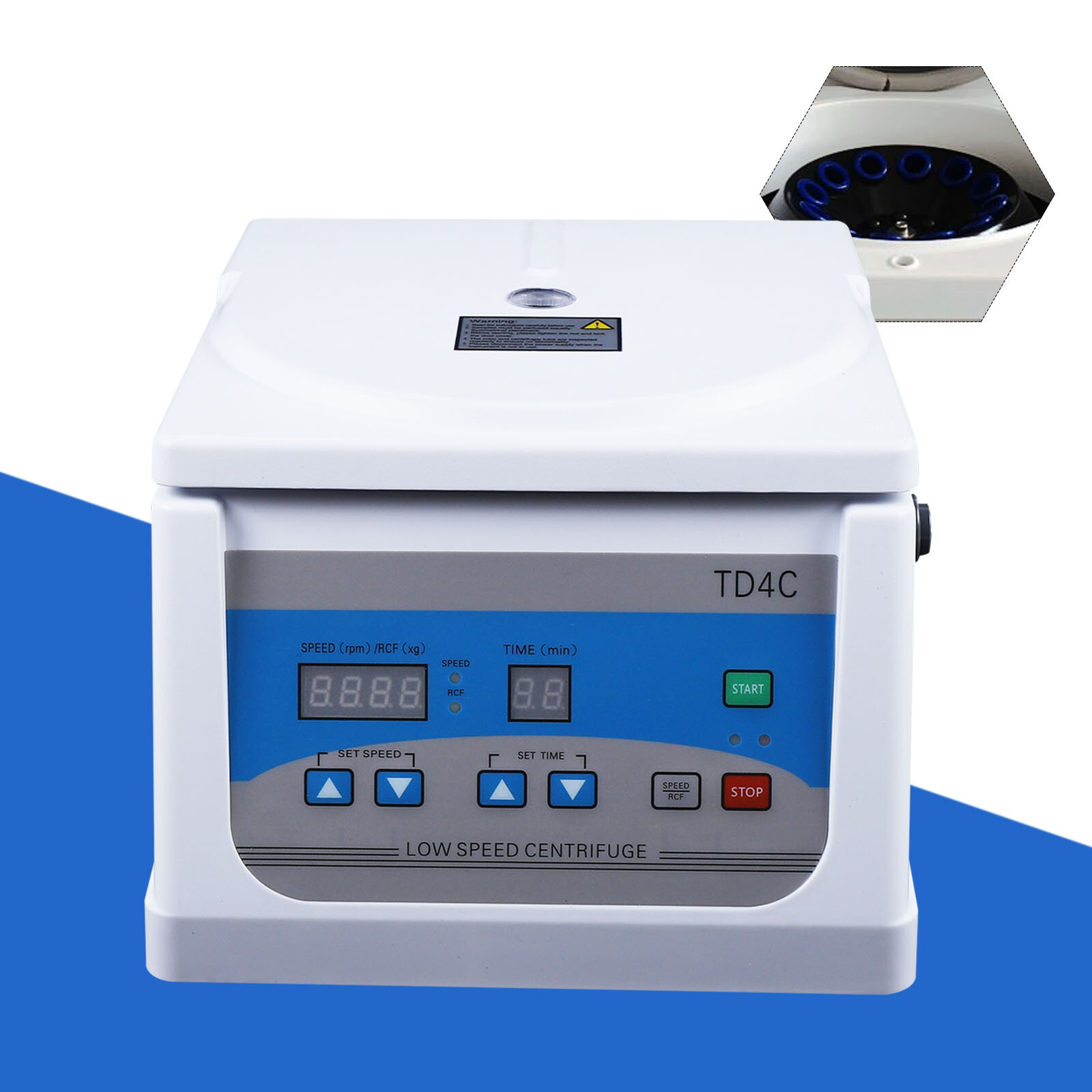

Photos from current listings. Actual item, color, and included accessories may vary.
Blood Centrifuge Buying Guide
A blood centrifuge is laboratory equipment that separates whole blood into plasma, buffy coat, and red cells using controlled centrifugal force. The key trade-off is between fixed-angle/bench-top units for high-throughput clinical labs and compact stat/spin-down models for point-of-care PRP or microhematocrit work. Buy a unit rated for your tube volume and required RCF (relative centrifugal force), not just one that lists 'blood centrifuge' on the box.
Median $359.16
Key takeaways
- Swing-out rotors accept 15 mL and 50 mL conical tubes at low speed (3,000–4,000 RPM) for PRP and cell separation, while fixed-angle rotors spin microhematocrit capillaries at 10,000–15,000 RPM.
- Clinical blood banking uses 1,000–3,000 × g for 15–20 minutes; platelet-rich plasma protocols typically require two spins: 1,000–1,500 × g for 10 min, then 2,000–3,000 × g for 10 min.
- Aerosol-tight lids and sealed rotor buckets are mandatory for any blood sample to prevent biohazard aerosol release; units without gasketed lids are not suitable for pathogenic blood.
At a glance
- Category
- Centrifuges, Mixers & Shakers
- Last updated
- Nov 28, 2026
Current offers
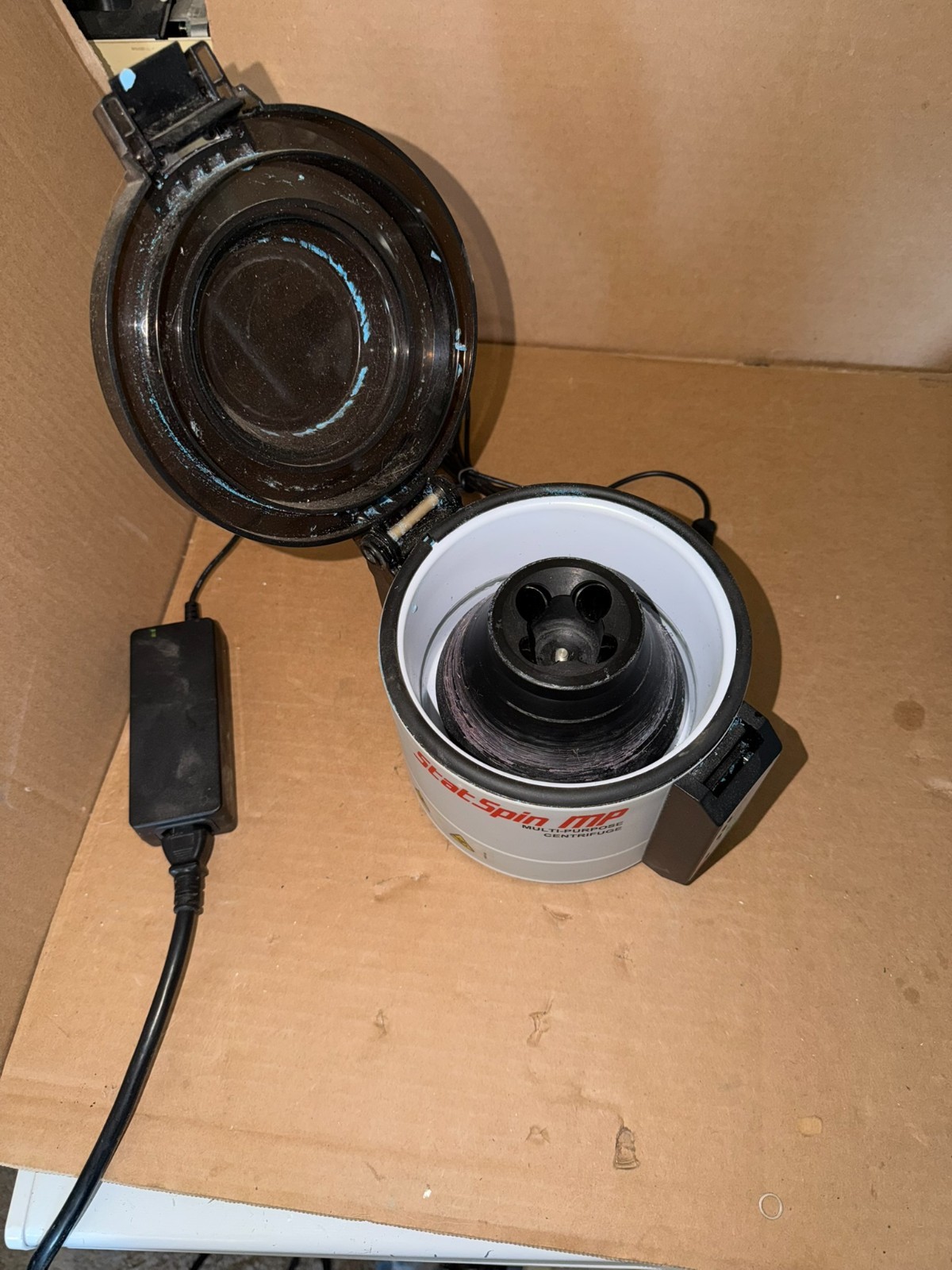
Highlights
- Swing-out rotors accept 15 mL and 50 mL conical tubes at low speed (3,000–4,000 RPM) for PRP and cell separation, while fixed-angle rotors spin microhematocrit capillaries at 10,000–15,000 RPM.
- Clinical blood banking uses 1,000–3,000 × g for 15–20 minutes; platelet-rich plasma protocols typically require two spins: 1,000–1,500 × g for 10 min, then 2,000–3,000 × g for 10 min.
- Aerosol-tight lids and sealed rotor buckets are mandatory for any blood sample to prevent biohazard aerosol release; units without gasketed lids are not suitable for pathogenic blood.
- Voltage and plug standard must match your region (110–120 V 60 Hz North America vs 220–240 V 50 Hz Europe/Asia); dual-voltage or external transformer models add flexibility but check amp draw.
Best use cases
- Best fit: a 8×15 mL low-speed swing-out centrifuge for PRP/beauty clinics and small blood labs processing up to 8 tubes per cycle at 3,000–4,000 RPM; skip fixed-angle microcentrifuges if you need 15 mL conical capacity.
- Best fit: a compact stat-spin centrifuge (e.g., Beckman Coulter StatSpin Express 2 class) for STAT chemistry and coagulation testing where 2–5 minute spin-down of 2–3 mL tubes matters; skip large floor models if bench space is under 30 cm wide.
- Best fit: a 12–24 tube fixed-angle centrifuge for clinical hematology and blood banking with 10,000+ RPM and aerosol-tight lids; skip low-speed beauty units if you need g-force above 5,000 × g for cell pellets.
- Wrong fit: any centrifuge without a sealed rotor or aerosol lid for whole blood; wrong fit: a 110 V only unit in a 220–240 V country without a step-down transformer rated for the unit's wattage.
Buying tips
- Match tube capacity to your workload: 8×15 mL handles small PRP batches; 12–24×5–15 mL suits clinical labs; choose 50 mL swing-out buckets if you process larger blood volumes.
- Check RCF, not just RPM: required g-force depends on rotor radius; a unit claiming 4,000 RPM may deliver only 1,500 × g with a small rotor—confirm the published RCF for your tube type.
- For blood safety, require a lid with silicone gasket and autoclavable rotor/buckets; polypropylene tubes and sealed aerosol caps are standard for biohazard containment.
- Verify voltage and plug type before purchase: 120 V 60 Hz for North America, 230 V 50 Hz for EU/UK/Asia; a 110 V unit on 220 V mains without a transformer will fail immediately.
Specs
| Rotor Type | Swing-out vs Fixed-angle |
|---|---|
| Max RCF | 1,500–15,000 × g by model |
| Tube Capacity | 8–24 × 1.5–50 mL |
| Safety Lid | Aerosol-tight gasketed vs open |
Related searches
What to check before buying
- Measure your bench depth and height clearance: compact stat centrifuges need roughly 30×30 cm footprint, while 24-tube clinical units can exceed 50 cm width and 40 kg.
- Confirm your tube sizes (1.5/2 mL microcentrifuge, 5/10/15 mL conical, 50 mL conical, or capillary) and that the rotor/buckets included match—extra rotors are often sold separately.
- Check your lab's electrical circuit: centrifuge amp draw at 120 V can be 3–8 A; dedicated outlet or circuit may be needed for larger units.
- Verify noise and vibration rating if placed near patient areas: clinical centrifuges typically run 50–65 dB; balance tubes by weight to within 0.1 g to prevent vibration.
FAQ
Data sources: eBay / Amazon listings and product attribute feeds. Updated Nov 28, 2026.
Some links on this page are affiliate links. If you buy after clicking one, we may earn a commission at no extra cost to you. This does not change which products appear here or their order. Affiliate disclosure.